
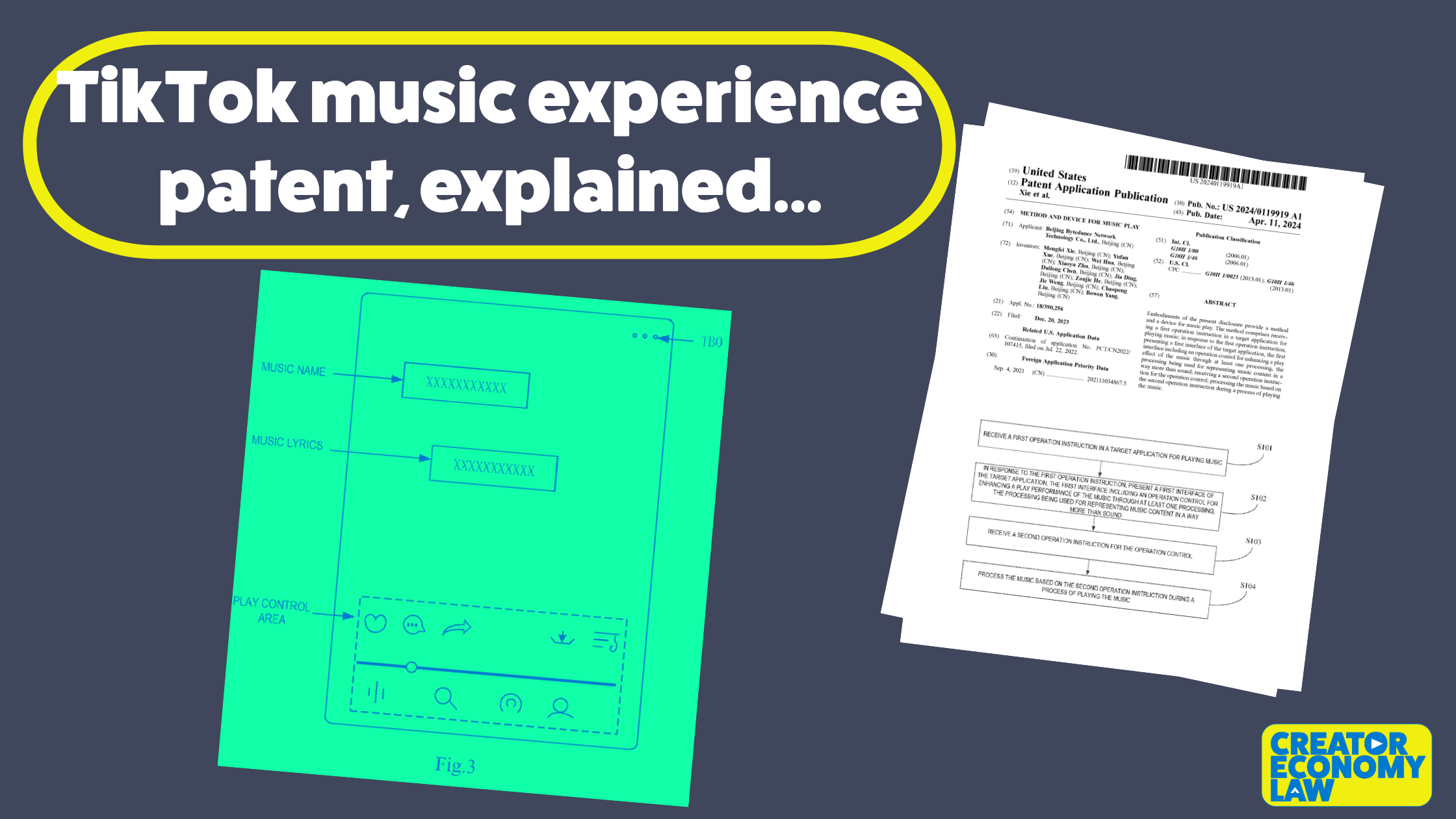

TikTok’s parent company, Beijing Bytedance Network Technology Co., Ltd., is in the process of extending U.S. patent protections to one of its Chinese-based inventions, according to a newly uncovered filing with the U.S. Patent and Trademark Office.
The patent application, Appl. No. 2024/0119919, describes a method and device for enhancing music play on electronic devices. The technology aims to provide a more immersive and interactive music experience for users. The invention’s described technology could make the music experience on TikTok more immersive and interactive, encouraging users to not only listen to music but also engage with the visual and haptic elements. It could also help differentiate TikTok from other music streaming and social media platforms.
Operation Control
The core concept revolves around introducing an “operation control” within a music application’s interface. This control allows users to enhance the music playback through various processing methods that go beyond just sound. These enhancements could include visual representations like flashing lights, screen effects, or even haptic feedback like vibrations, all synchronized with the music.
The patent application outlines a process where the user initiates music playback, and the software application presents an interface with this operation control. When the user interacts with the control, the music is processed in real-time to incorporate the chosen enhancements. This could mean that as the music plays, the device’s screen might flash in sync with the beat, or the device might vibrate to the rhythm, creating a multi-sensory experience.
Method and Device

It’s not uncommon to use a single patent application to combine two different aspects of a utility patent, such as the method, process, or system to accomplish an outcome, or the apparatus, product, or device.
A “method and device” patent application refers to a patent that covers both the process (method) of doing something and the apparatus (device) used to carry out that process. In this specific patent application, the “method” refers to the steps involved in enhancing music playback with visual and haptic effects, while the “device” refers to the electronic device (e.g., smartphone, tablet) on which the method is implemented. The patent application can also be used to protect aspects of an improvement to an existing electronic device.
In practical terms, this means that Bytedance is seeking protection for both the software algorithms and techniques used to create the enhanced music experience, as well as the hardware components of the device that enable those effects. This broader protection could make it more difficult for competitors to replicate or circumvent the technology, as they would need to avoid infringing on both the method and device claims of the patent.
But Why?
In essence, this technology seeks to elevate the way users engage with music on their devices, making it more interactive and engaging by incorporating visual, haptic, and potentially other sensory elements into the playback process. Is this a device that TikTok or Bytedance manufacture and sell directly to consumers? Or is it going to be a core technology that they license to third party manufacturers to incorporate into existing or future devices?
Additionally, it could mean more partnership and monetization opportunities. For example, TikTok could partner with artists or music labels to create exclusive, interactive music experiences that users might be willing to pay for, or have included in a premium or artist-specific subscription offering. Additionally, the technology could be integrated into advertising campaigns, offering brands new and engaging ways to reach their target audience.
Despite facing a potential forced sale in the U.S., the patent application suggests that TikTok, and it’s parent company Bytedance, are actively exploring ways to innovate and enhance the user experience, particularly in the realm of music. This strategic move could have significant implications for the company’s future growth, revenue generation, and competitive positioning in the market.
Credit to Music Business Worldwide for first spotting the patent filing. The full application publication is below.



One response to “TikTok’s latest invention aims to make music experiences more immersive, based on user environments”
[…] unique, et que l’on peut retrouver sur les schémas publiés par ByteDance et reprit par le site Creator Economy Law. Ce dépôt s’inscrit dans la continuité des développements proposés par ByteDance, telle […]